
Walnut & Its Characteristics
Walnut as a Design Material
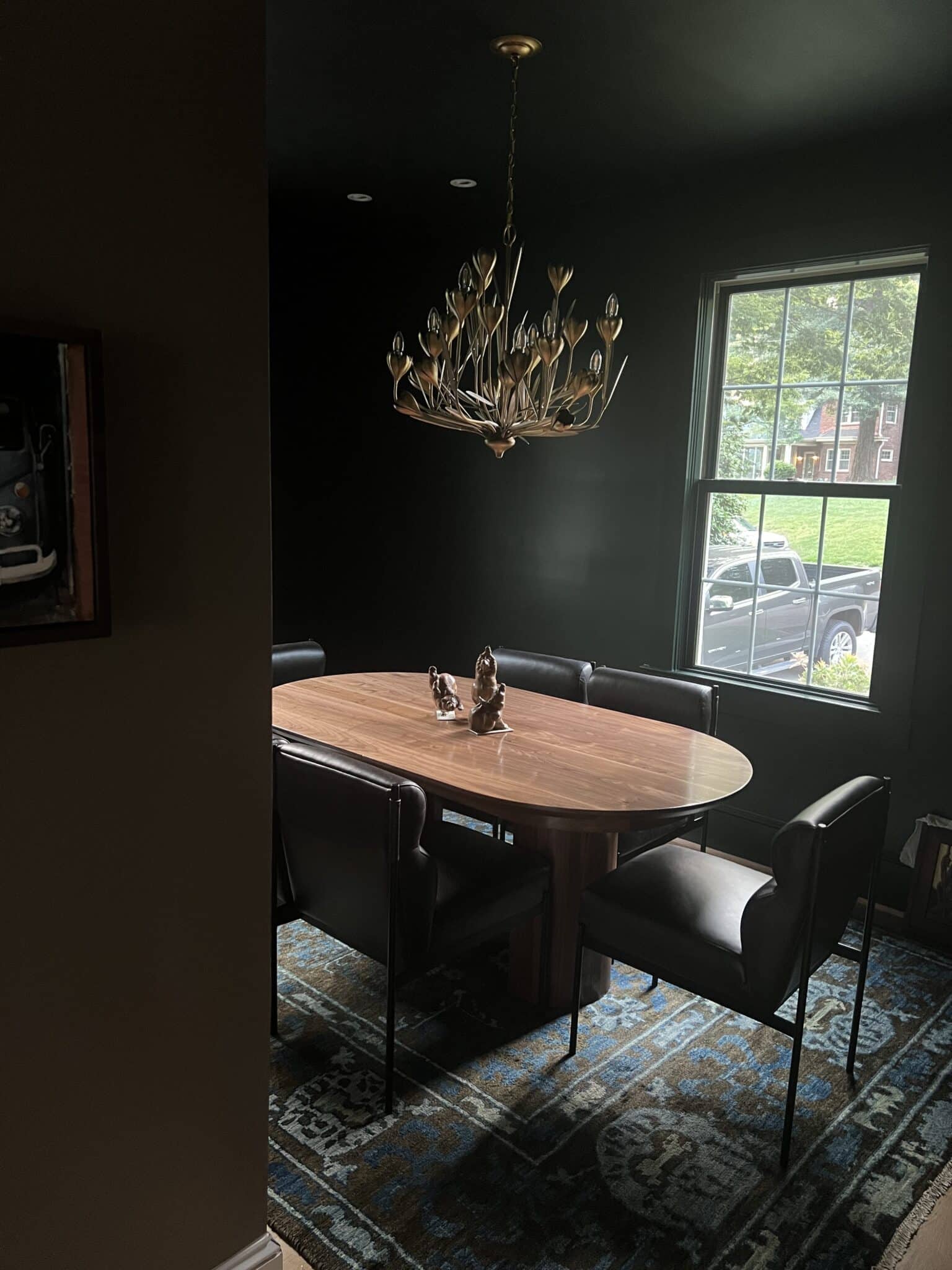
When carefully selected, sanded, and finished, walnut offers a surface that is visually rich, tactile, and enduring. Proper preparation allows depth in both color and grain, creating the sense that you are looking into the wood rather than simply at it. Walnut’s ability to feel both expressive and controlled has made it a long-standing choice for furniture, architectural interiors, and hospitality design.
Walnut Characteristics and Color
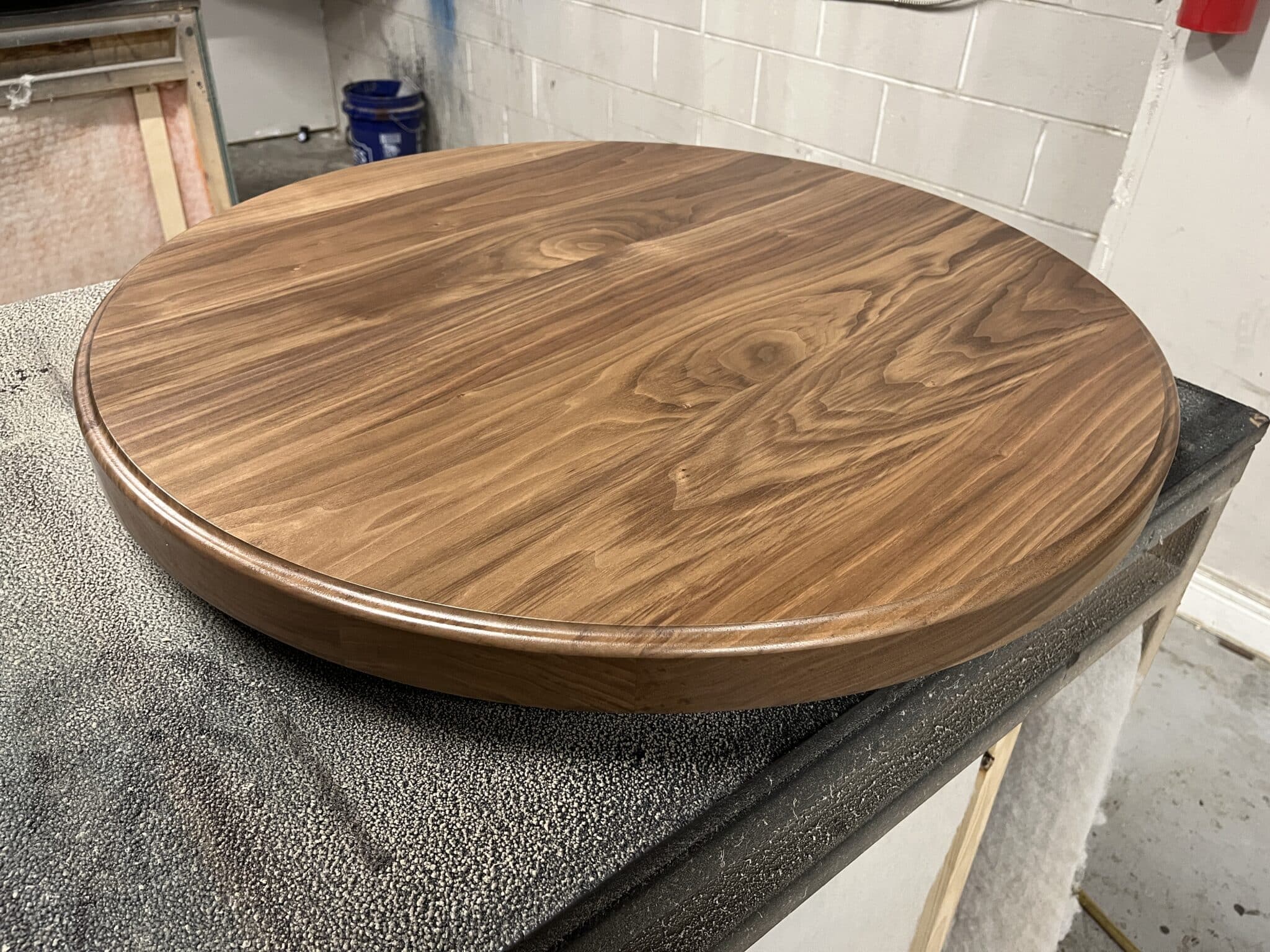
Walnut heartwood ranges from light brown to deep chocolate tones, often with subtle red or purple undertones. The sapwood is lighter in color, typically appearing blond to light brown. This natural warmth allows walnut to anchor a space without overpowering surrounding materials. Over time, walnut develops a soft patina, mellowing slightly with light exposure rather than dramatically darkening.
For tabletop applications, especially across larger installations, controlled color selection is essential. Consistency allows the material to read as intentional while still showcasing the natural variation that gives walnut its character.
Grain and Figure
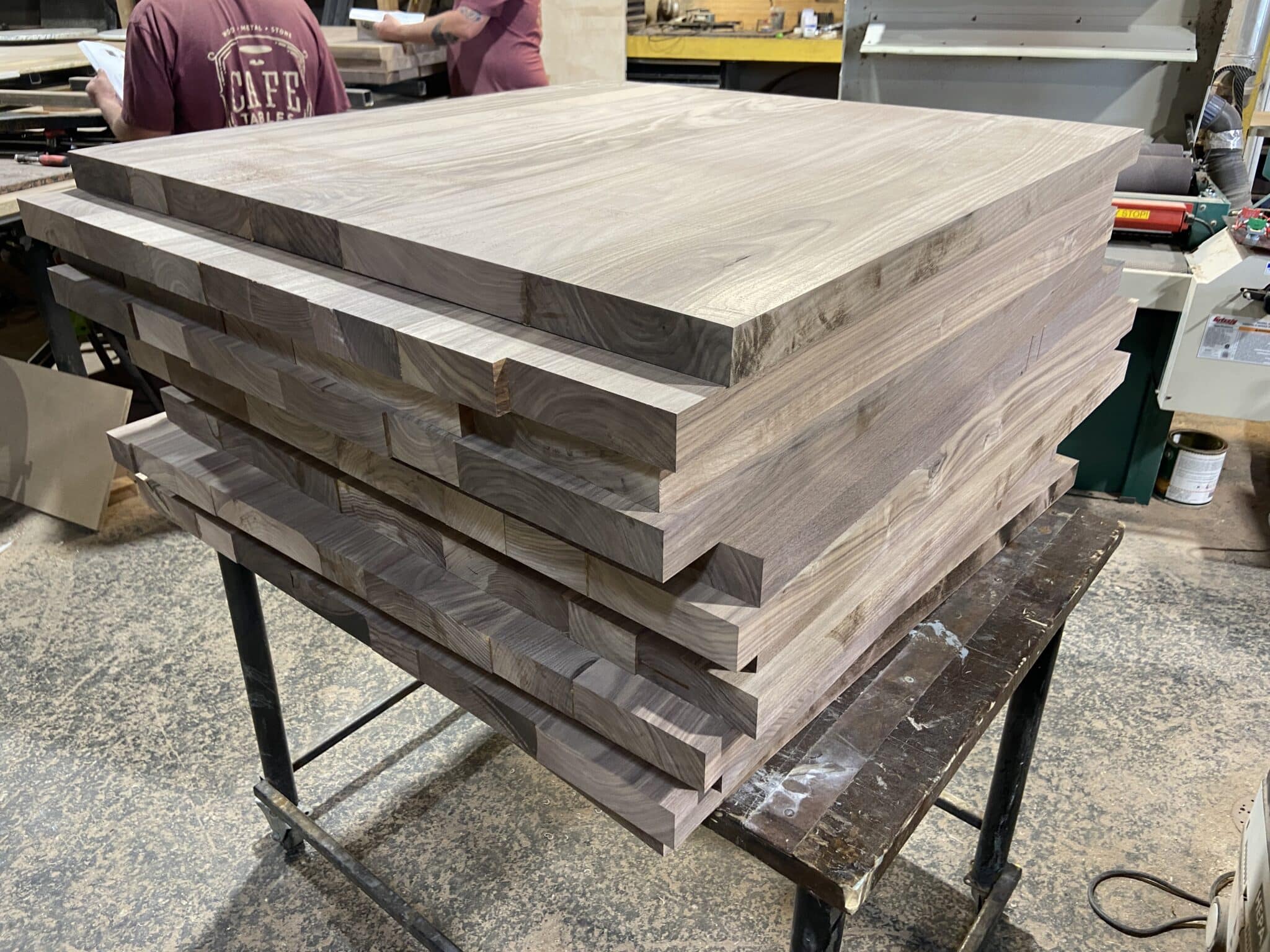
Walnut is prized for its expressive yet balanced grain. While commonly straight-grained, it may also display gentle waves or cathedral patterns that add movement and depth. When building tabletops, we select and arrange each plank to achieve a pleasing balance of grain and color.
Surfaces that are too uniform can feel flat, while overly dramatic figure can feel busy at scale. Thoughtful selection and layout result in tabletops that feel composed, natural, and visually resolved.
Material Selection for Tabletop Use
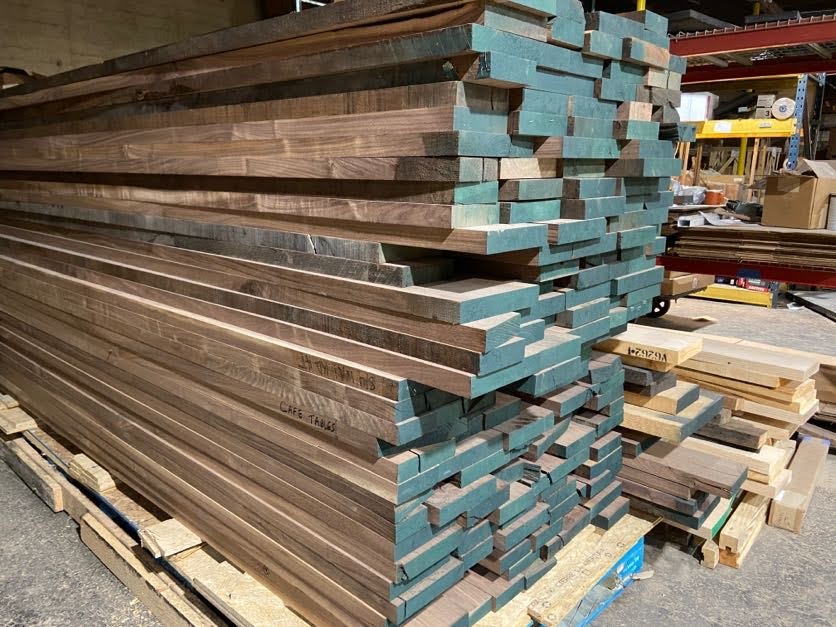
For tabletop applications—and to maintain visual continuity across multi-table projects—we use Superior and Heart Veneer grade walnut sourced predominantly from the American Midwest. These quality grades allow for greater control over both color range and grain character.
This approach is particularly important in restaurant and hospitality environments, where multiple tables are viewed together within a single space. Consistent material selection ensures cohesion without sacrificing the warmth and movement that makes walnut distinctive.
Hardness, Stability, and Suitability
Walnut is a moderately-hard hardwood that offers an ideal balance between durability and workability. It performs well under everyday use while remaining stable when properly dried, constructed, and finished.
These characteristics make walnut well suited for tabletops, where flatness, structural integrity, and long-term performance are essential, especially in commercial environments.
Surface Preparation and Sanding
At Cafe Tables, surface preparation is critical to both appearance and durability. We sand walnut tabletops to a 220 grit to provide optimal depth and clarity in the grain while maintaining sufficient tooth for finishes to properly bond. This approach enhances walnut’s natural texture without burnishing the surface, allowing finishes to perform as intended over time.
Finishes and Performance
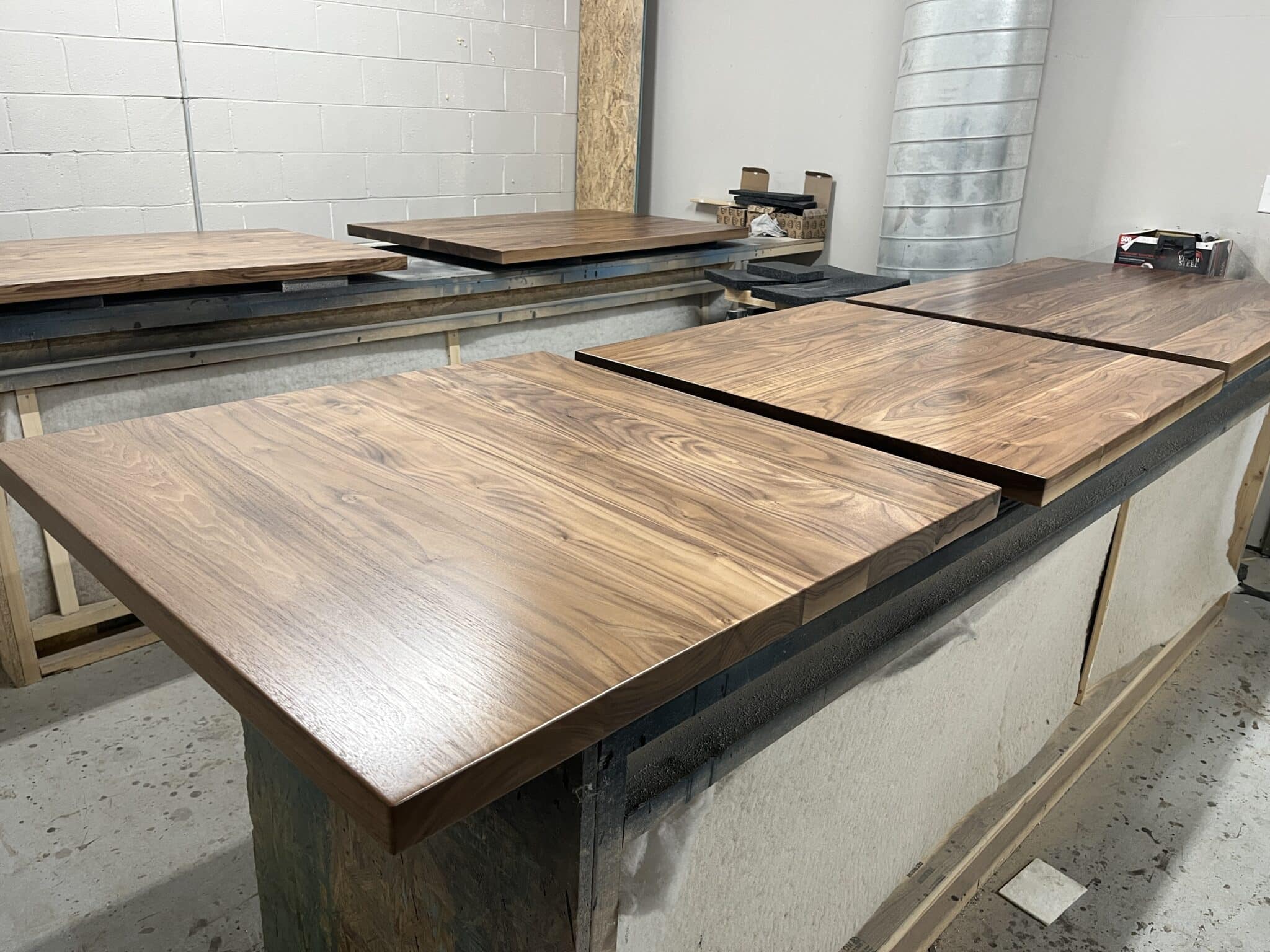
We typically finish our walnut tabletops with a two-part polyurethane finish designed to withstand the harsh conditions associated with commercial environments, including frequent cleaning, moisture exposure, abrasion, and daily wear. This system preserves the depth and richness of walnut while providing long-term protection that oil finishes alone cannot offer in high-use settings.
Upon request, we can build walnut tabletops with an oil finish for clients who prefer the tactile feel of the wood itself. For oil-finished surfaces, we sand to 320 grit to maximize smoothness. While oil finishes offer a distinct aesthetic and feel, we recommend polyurethane for commercial applications due to its superior durability, ease of maintenance, and long-term uniformity.
Why Walnut Continues to Be Specified
Walnut remains a preferred material for designers because it offers:
- Warm, natural color without visual heaviness
- Expressive grain with inherent restraint
- Compatibility with stone, metal, glass, and modern interiors, including metal or stone inlay applications. (See our brass, copper and zinc inlay tops!)
- Proven performance in both residential and commercial settings
When thoughtfully selected and finished, walnut delivers a balance of beauty and reliability that few materials match.
Walnut in Our Work
Our approach to walnut focuses on optimizing its natural qualities—color, grain, and movement—while ensuring consistency, durability, and long-term performance. Through careful material selection, controlled sanding, and finishes chosen for real-world use, we create walnut tabletops that are refined, resilient, and designed to perform in demanding environments. You can purchase our walnut tabletops here!
-

- walnut lumber
-
- choosing the perfect walnut planks
-
- walnut plank table tops

-
- finished with a high grade polyurethane
-
- walnut is prized for its expressive yet balanced grain
-

- custom walnut dining table fabricated by cafe tables